

Compliance Built for SME Sales and Billing Workflows
From Salesforce Records to Tunisia DGI Electronic Invoices
- Transaction Is Identified: Relevant Salesforce sales activity is recognized when a transaction reaches the stage requiring electronic invoicing.
- Customer Data Is Gathered: Account, product, opportunity, sales, service, and applicable tax information is collected from connected Salesforce records.
- Transaction Context Is Combined: Separate CRM records are brought together to represent the complete commercial activity behind the invoice.
- Invoice Data Is Structured: Customer details, line information, values, tax details, and references are organized into an electronic document.
- DGI Processing Begins: The prepared invoice enters the applicable Tunisia electronic invoicing infrastructure for DGI processing and regulatory response.
- Records Stay Connected: Electronic invoice information can remain associated with originating Salesforce activity for continued transaction visibility.
What Does the Salesforce Starter Connector Enable?
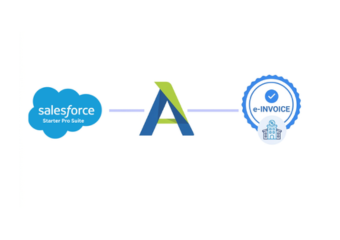
Advintek connects Salesforce Starter Pro Suite customer and sales information with Tunisia DGI e-invoicing, extending CRM activity into structured electronic invoice preparation, validation, submission, tracking, and regulatory processing while maintaining established sales workflows.
- Uses Salesforce customer information
- Connects products with transactions
- Carries relevant tax information
- Maintains CRM invoice references
Why SMEs Choose Advintek with Salesforce Starter
- Account Information: Existing customer information can establish recipient identity and billing context without recreating details separately.
- Opportunity Records: Relevant opportunity information can explain the commercial background behind activity progressing toward invoicing.
- Product Records: Product information can provide descriptions, identifiers, quantities, and applicable details for electronic invoice lines.
- Sales Activity: Completed sales records can provide the transaction values and references needed for invoice preparation.
- Service Records: Applicable service activity can contribute supporting information where delivered services form part of the transaction.
- Tax Details: Relevant VAT and tax information can be considered alongside commercial values before DGI processing.
Complete Control Over Tunisia E-Invoicing Workflows in One Platform
CRM Data Continuity
Customer and sales information can provide source data for electronic invoices while keeping documents connected with their CRM origin.
Detailed Product Lines
Salesforce product records can contribute descriptions, identifiers, quantities, and related information to electronic invoice content.
Customer Document Tracking
Electronic invoice information can remain associated with customer and sales activity after Tunisia DGI processing.
Built for Salesforce Starter Users Tunisia
Businesses using Salesforce Starter Pro Suite can connect accounts, opportunities, products, sales activity, service records, and tax information with Tunisia DGI e-invoicing while maintaining established CRM workflows and supporting consistent electronic invoice preparation, validation, submission, and tracking.
- Continue managing CRM activity
- Identify completed sales transactions
- Preserve customer information
- Maintain invoice record links
With Tunisia DGI e-Invoicing
Extend Salesforce Starter Pro Suite beyond customer and sales management by connecting relevant CRM information with Tunisia DGI electronic invoicing.
Carry account details, products, sales records, service information, tax data, invoice content, and DGI processing results through one connected workflow.
Ready e-Invoice System
Frequently Asked Questions Salesforce Starter e-Invoicing Tunisia
Can Salesforce Starter Pro Suite connect with Tunisia DGI e-invoicing?
Yes. Relevant Salesforce customer, sales, product, and transaction information can connect with an electronic invoicing workflow supporting applicable Tunisia DGI requirements.
Which Salesforce records can support electronic invoice preparation?
Depending on the transaction, accounts, opportunities, products, sales activity, service records, tax information, values, and related references can contribute.
Can Salesforce product information appear on DGI invoices?
Yes. Applicable product descriptions, identifiers, quantities, and related information can contribute to electronic invoice lines representing the underlying transaction.
Can Salesforce customer records provide invoice recipient information?
Yes. Relevant account information can provide customer identification and billing context when preparing electronic invoices from Salesforce activity.
Can Salesforce service records contribute to electronic invoices?
Where applicable, service information can provide supporting details for transactions involving delivered services and related customer activities.